LG 전자

광케이블 측정 방법
날짜
ㅇㅇㅇ
어플리케이션 보기
Search
Australian Synchrotron embraces flexible, reconfigurable instrumentation for EPICS-controlled experiments
Learn how researchers are using the Moku Python API to control a range of experiments from a single EPICS interface

The Australian Synchrotron produces powerful beams of light known as beamlines by accelerating electrons up to the speed of light. When these electrons turn, they release high-energy X-rays that can then be used to perform research on a vast array of experiments from medical and food research to advanced material and nanotechnology experiments.
With such a wide variety of research areas, the Australian Synchrotron must control and communicate with a significant number of test instruments. The Experimental Physics and Industrial Control System, or EPICS, is a public, open-source project created through collaboration between many of the world’s most prestigious scientific facilities for large-scale distributed control system applications. All test instrumentation within the Australian Synchrotron facility must be controllable through their existing EPICS infrastructure to enable efficient, precise equipment management.
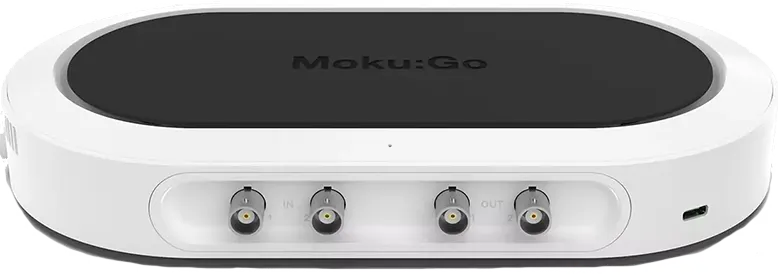
Brett Alda, a senior controls engineer at the Australian Synchrotron, who had heard about the capability of Moku devices, has volunteered his own time to develop a software EPICS driver to control Liquid Instruments’ FPGA-based Moku devices using the readily available Python API, an approach that will help researchers across the globe integrate the reconfigurable suite of Moku instruments into their EPICS infrastructures. With support from the Synchrotron Science team and management, the Moku device can be seen at the test station in Figure 1.
망고보도 디스플레이